

12 Things Your Autistic Teen or Young Adult Needs to Know to Live Independently
The transition from teenager to young adult is arguably the biggest transition your child has had to make in their entire life. In my private practice, I see so many young adults who couldn’t navigate that transition because they weren’t given the skills that they needed to succeed.
This can be especially true of the patients assigned female at birth that I work with. They tend to mask more, and it’s easy for parents not to know just how underprepared they are to be on their own and take full control over how they navigate their schedule, their daily tasks of living, and their socialization and interactions with others.
Autism is a neurodevelopmental disorder. It is not reasonable to assume autistic young adults can do things that their peers can do without assessment.
And there is an important distinction here:
Knowing how to do something is not the same as being able to independently recognize when it needs to be done, initiate it, sequence the steps, and complete it.
Your child may absolutely know how to do laundry, make food, take medication, or email a professor and still not be able to consistently recognize when those things need to happen and get themselves through all of the steps without prompting.
For the last 10 years, I’ve worked with many incredibly bright young adults who have been severely affected by being sent off to college unprepared. Many of these kids had already earned significant markers of academic success and ability. Some had associate degrees from non-traditional schooling, some had a full year of college credits from AP exams, some scored high enough on their SATs to get into Ivy League schools, some had straight A’s throughout high school, some had successfully held part-time jobs, and some had navigated high school with few or no formal accommodations.
In short, on paper, they looked like ideal college students who were set up for success. The reality was that much of that success had been supported by scaffolding built into their home lives. Parents were often never made aware of how dramatically different it would be to expect their child to maintain that same level of functioning once those supports disappeared—or how important it was to teach them how to build those supports for themselves as independent adults.
1. How to recognize their internal hunger cues.
If your child doesn’t reliably know when they’re hungry, they may not eat regularly. Going too long without eating can contribute to fatigue, irritability, increased anxiety, headaches, shakiness, and difficulty concentrating. It’s easy to see how this can affect schoolwork, the ability to socialize with peers, and overall mental health.
For some autistic people, hunger doesn’t necessarily feel like “I’m hungry.” It may show up as nausea, suddenly feeling exhausted, irritability, a headache, shakiness, or being unable to think clearly.
It’s also important that they know what to do if they don’t have reliable hunger cues. Can they recognize that enough time has passed that they probably need to eat even if their body isn’t telling them to?
2. How to make and/or order food for themselves.
Ordering food requires almost as much executive functioning bandwidth as cooking, and it’s paired with having to complete a social interaction in a sometimes crowded or sensory overwhelming environment. Be especially vigilant with this one if your child has challenges around food textures and varieties.
Knowing how to make food and actually feeding yourself consistently are two different skills. Can they decide what to eat, figure out what food is available, initiate making it, and then actually sit down and eat it?
Can they grocery shop or order groceries? Do they notice when they’re running out of foods they depend on? Can they recognize when food has spoiled?
A young adult who can make a grilled cheese sandwich has not necessarily demonstrated that they can independently keep themselves fed.
3. How to recognize when they’re becoming overwhelmed before they reach shutdown or meltdown.
It’s not enough to know what sensory overload feels like once they’re already unable to function. They need some ability to recognize their earlier cues and understand what those cues mean for their ability to keep participating, driving, studying, socializing, or making decisions.
What happens before the shutdown or meltdown? Do they stop being able to follow conversation? Become irritable? Get a headache? Stop being able to make decisions? Start feeling physically uncomfortable without knowing why?
The goal is not to teach them to tolerate unlimited amounts of overwhelm. The skill is recognizing what is happening to their nervous system early enough to respond to it.
4. How to use an alarm clock to wake themselves up and initiate their day.
Being able to set an alarm and being able to independently get through a morning routine are not the same thing.
Can they wake up, get out of bed, get dressed, take medications if needed, eat, gather what they need, and leave on time without another person prompting the next step?
Autistic and ADHD young adults may be completely capable of doing every individual task in a routine while still having difficulty initiating and sequencing those tasks independently.
5. How to tell when clothing needs to be washed and how to use a washing machine, dryer, and laundry detergent.
This also includes knowing how often things like underwear, socks, towels, sheets, and frequently worn clothing need to be washed.
Can they recognize that they’re getting low on clean clothes early enough to do laundry, or do they only realize it when they need to leave the house and have nothing clean to wear?
Keep sensory and interoceptive differences in mind here too. Your child may genuinely not notice an odor that is obvious to someone else.
6. How to stay hydrated.
Just like hunger, thirst is an internal body cue that some autistic people don’t recognize reliably. If your child doesn’t consistently feel thirsty, do they have another way of knowing when they need fluids?
This can become especially important for young adults who take medications that cause dry mouth, increased sweating, or changes in fluid balance, as well as those who regularly drink caffeine.
Do they recognize signs that they may not be drinking enough, and can they remember to drink throughout the day without another person repeatedly reminding them?
7. How to discern a safe person from a “red flag” person, both in peers and in authority figures like teachers, professors, employers, and upperclassmen.
Can they recognize coercion, manipulation, grooming, financial exploitation, someone who repeatedly ignores a boundary, someone who pressures them after they say no, or someone who becomes intensely close to them very quickly?
Can they recognize when someone is asking for too much—money, rides, favors, access to their home, emotional support, schoolwork, sex, or simply more of their time and attention than they want to give?
It is also important that autistic young adults understand that authority does not automatically equal safety. A professor, coach, employer, medical provider, RA, older student, police officer, or other authority figure can still behave inappropriately.
Autistic people are often taught from childhood to follow rules, comply with adults, and assume other people understand social situations better than they do. That can become a vulnerability if they have never also been explicitly taught that they are allowed to question another person’s behavior.
8. How to know when they’re sick and what to do about it.
Can they recognize when they have a fever, are dehydrated, need to rest, should stay home from class or work, need to make an appointment, or are sick enough that they need more urgent medical attention?
Do they know how to take their temperature? Where their insurance card is? What medications they take? What over-the-counter medications they can safely use?
Can they make an appointment and explain what is happening to a medical provider?
They also need to know how to communicate with a professor or employer when they’re sick without either saying nothing or feeling like they have to disclose their entire medical history.
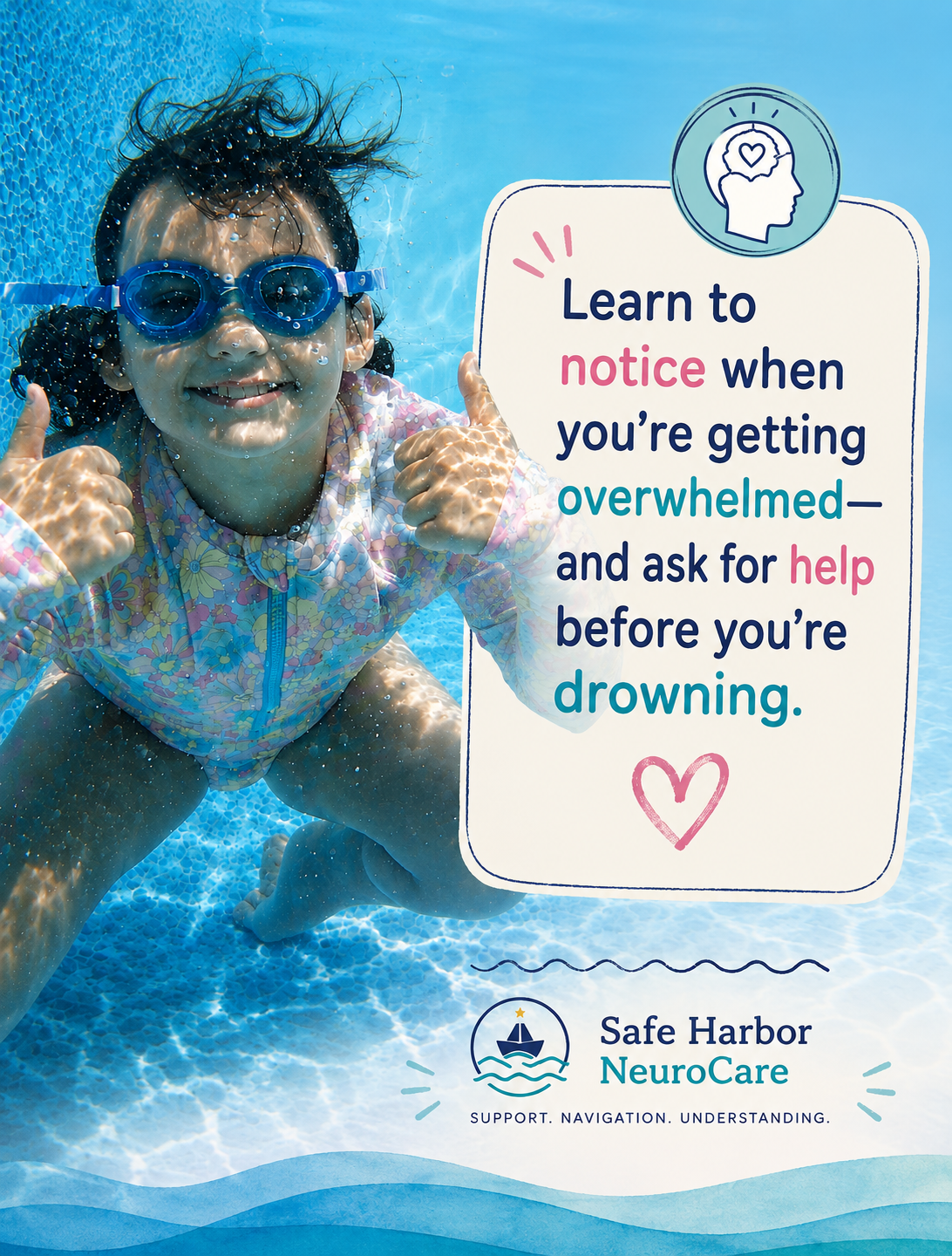
Independence isn’t just knowing how to cook, drive, or manage money. It’s knowing how to recognize when your own nervous system is reaching its limit—and knowing what to do before you’re overwhelmed.
9. How to regulate their own screen time and other activities that are difficult for them to disengage from.
The issue isn’t just the number of hours spent on a screen.
Can they recognize when they need to stop gaming, scrolling, watching videos, researching, reading, or engaging in another preferred activity because they need to eat, shower, sleep, go to class, or complete another task?
For autistic and ADHD young adults, the difficulty may be less about knowing they “should” stop and more about being able to disengage from one activity and initiate the next one.
If your child has always had a parent saying, “It’s 11:00. Turn the computer off and go to bed,” what happens when that external regulation disappears?
10. How to recognize and communicate their sexual and physical boundaries.
This includes knowing that they are allowed to say no, change their mind, stop an interaction that has already started, and decide what kinds of touch they do and do not want.
It also means recognizing that another person’s disappointment, persistence, attraction, anger, or previous kindness does not create an obligation to continue a sexual or physical interaction.
They also need to understand that consent works in both directions. They need to recognize and respect another person’s boundaries, hesitation, withdrawal of consent, and nonverbal indications that the other person is no longer comfortable.
Autistic young adults who have spent years being taught to comply with adults, tolerate unwanted touch, or defer to other people’s judgment can be especially vulnerable here.
Do not assume that because your child understands the mechanics of sex that they understand consent, coercion, sexual pressure, relationship expectations, contraception, STI prevention, or what healthy sexual boundaries actually look like. Those are separate skills.
11. How to manage their medications independently.
Do they know what they take, why they take it, when they take it, and what happens if they miss a dose?
Do they know which medications should not be stopped abruptly?
Can they recognize when they’re getting low, request a refill, pick it up from the pharmacy, and problem-solve if the pharmacy says there are no refills remaining?
Do they know who to contact if they are having side effects or think a medication isn’t working?
A pill organizer sitting on the counter isn’t the same thing as independently managing medication.
12. How to recover when the plan changes.
Independent adulthood involves cancelled classes, professors changing expectations, roommates changing plans, cars breaking down, work schedules moving, appointments being cancelled, buses running late, restaurants being closed, and stores not having the thing you expected them to have.
The question isn’t whether unexpected change is hard. For most autistic people, it is. The question is whether they have enough problem-solving ability to figure out what happens next without the entire day or week collapsing.
Can your kiddo identify the actual problem, come up with another option, ask someone for information when they need it, and determine which parts of the original plan can still happen?
Independence doesn’t mean being able to solve every unexpected problem alone, but it helps if you can recognizing, “I don’t know what to do next, and I need to ask someone.”
Independence needs to be assessed, not assumed.
A young adult can be academically bright, verbally articulate, hold a job, drive a car, and appear completely capable while still having significant gaps in the executive functioning, interoception, social judgment, self-advocacy, and daily living skills required to live independently.
Masking can make those gaps even easier to miss.
Before your child moves into a dorm, gets an apartment, starts college, or takes on significantly more independence, don’t just ask yourself, “Do they know how to do these things?”
Ask:
Do they recognize when they need to do them?
Can they initiate them without prompting?
Can they sequence all of the steps?
Can they problem-solve when something goes wrong?
And, most importantly, do they know when they need help?
